About ten months ago I was sitting at my computer and I just had the thought, “I need to get outside more”. I dug up my old camping gear that I took to Salcantay, drove out to the desert, and pitched my tent. The tent was about the size of a coffin, but I sat in it for a few hours waiting to get tired, then I lay down in the bed. It was so uncomfortable that I drove home and slept in my own bed.
The next day I went down the rabbit hole of camping gear and discovered that in the 14 years since I went to Peru, camping gear has gotten WAY better, mainly due to better materials. It seemed like many of the people in the videos were packing not just to camp, but to through-hike, a term I’d never heard before. The granddaddy of all through-hikes is the Appalachian Trail.
I had heard about the Appalachian trail before. One of my favorite authors, Bill Bryson, wrote an incredible book about it. Maybe I should hike some of the Appalachian Trail!
I started researching it and realized that I had just missed the window and would have to go the following year. This was the perfect excuse for a gear fanatic like myself to start accumulating lightweight camping gear, which I did.
As new gear came in I’d go camp in the mountains in Vegas to try it out, and then I’d return stuff I didn’t like and buy different stuff until I had the perfect setup. I knew that if I couldn’t sleep well I would definitely quit after one night, so I mainly focused on comfortable sleep. In the ten months I never actually researched what the Appalachian Trail was. Mainly I just wanted a challenge, some time away from screens, and to meet the insane people who take five months off from normal life to hike from Georgia to Maine.
For a while my mother and aunt planned to come with me, but then they found out there were mice out there, so it became a solo trip again.
You’d think that the most famous trail in the world would be easy to get to, but it’s not. First, you fly to Atlanta, which is easy enough. Then you drive an hour and a half to Amicalola State Park. Then you hike a very strenuous uphill 8.8 miles to get to Springer Mountain, which is the official start of the AT. There’s actually another way to do it that is a bit more convenient, but this the classic entry.
So I flew to Atlanta, walked two miles around town to practice (my first time wearing a loaded backpack) and do last minute errands like buy camping fuel and have dinner, and checked into my hotel.
The next morning I woke up, had a breakfast and a chocolate chip cookie (I figured I’d need the energy), and ubered to Amicalola State Park. I registered as an AT hiker and just started walking.
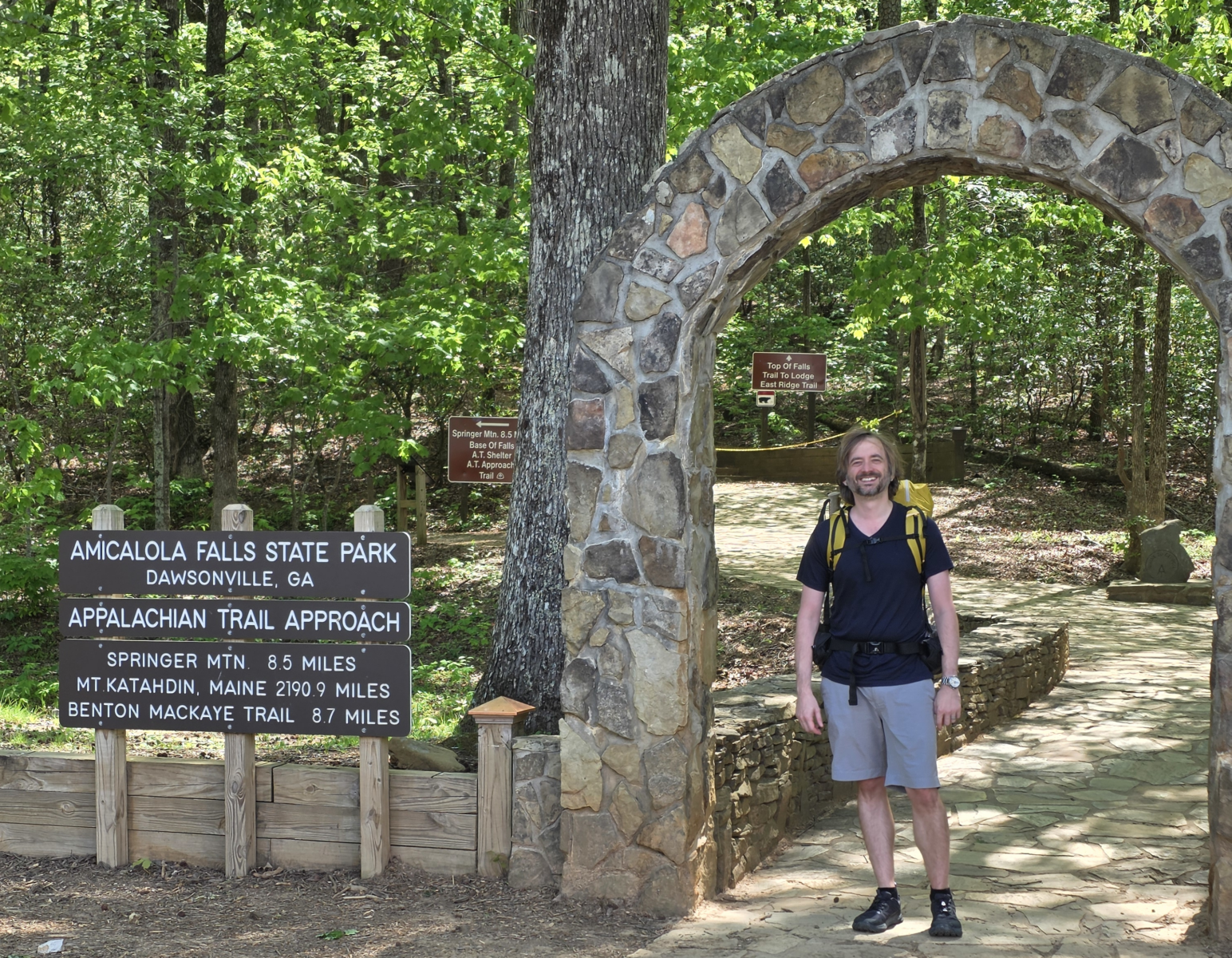
After almost a year of waiting, I was excited to be there. I hiked quickly, pausing several times to catch my breath as I went up the 600 stairs to get to the top of the waterfall. I didn’t realize that you can easily get water as you go, so I had a full 3 liters on my back. After 8.8 miles, I finally made it to Springer Mountain, the start of the Appalachian Trail. I saw my first “white blaze”, the marking of the AT, and made it to camp.
It took me four hours and forty-five minutes, which ChatGPT told me was an incredible pace. Most people do it in 6-10. I had been using ChatGPT for trip planning, and never had it been so confident in my abilities. I asked it how far I should go the next day and it assured me that someone at my elite-level should go 15.5 miles to Gooch Mountain Shelter.
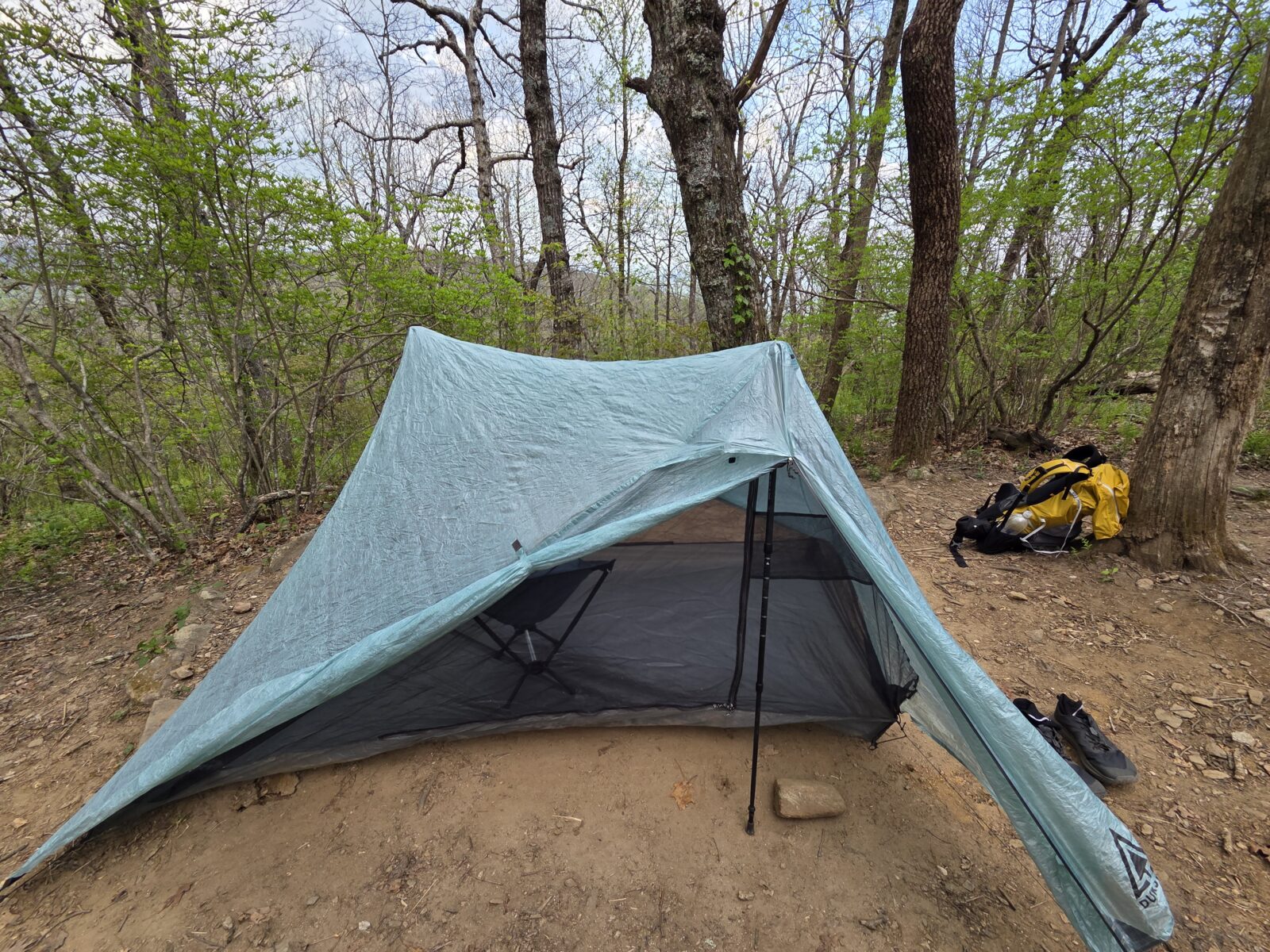
On the AT there are a few different options for places to camp. There are random cleared out areas of varying quality along the trail. If you’re ever just dying and want to stop, you can probably find somewhere within 30 minutes or so. But there’s nothing there besides space. The next level up are camp sites. They have more tent spots, usually a bear box or a cable system to hang your food, and access to water. But the Ritz-Carltons of the AT are the shelters. A shelter has everything a tent site has, plus some sort of building that you can just sleep in without a tent (but they usually don’t have a fourth wall, so I don’t quite understand why you’d do it), as well as a picnic table, and a privy (outhouse).
One of my main reasons to be on the AT was to meet the other people who were doing it, plus I was a little nervous about trying to hang my food bag by myself on a tree, so I was focused on the camp sites and shelters, as were most other hikers.
Shelters and even camp sites are relatively sparse, maybe every 4-8 miles. There’s also a weird idiosyncrasy with the Georgia section of the AT, which is that a prime stretch on the 3rd or 4th (depending on your pace) doesn’t allow camping anywhere unless you have a hard-sided bearproof food container. Because these containers aren’t necessary for any other part, I didn’t have one, so I absolutely had to traverse that ~8 mile stretch in one day.
I say all this to illustrate why in a given day there may only be one or two spots where you’d consider ending your day. ChatGPT told me not to stop at the shelter that was 8.4 miles from Springer Mountain, but rather the one that was 15.5 miles away.
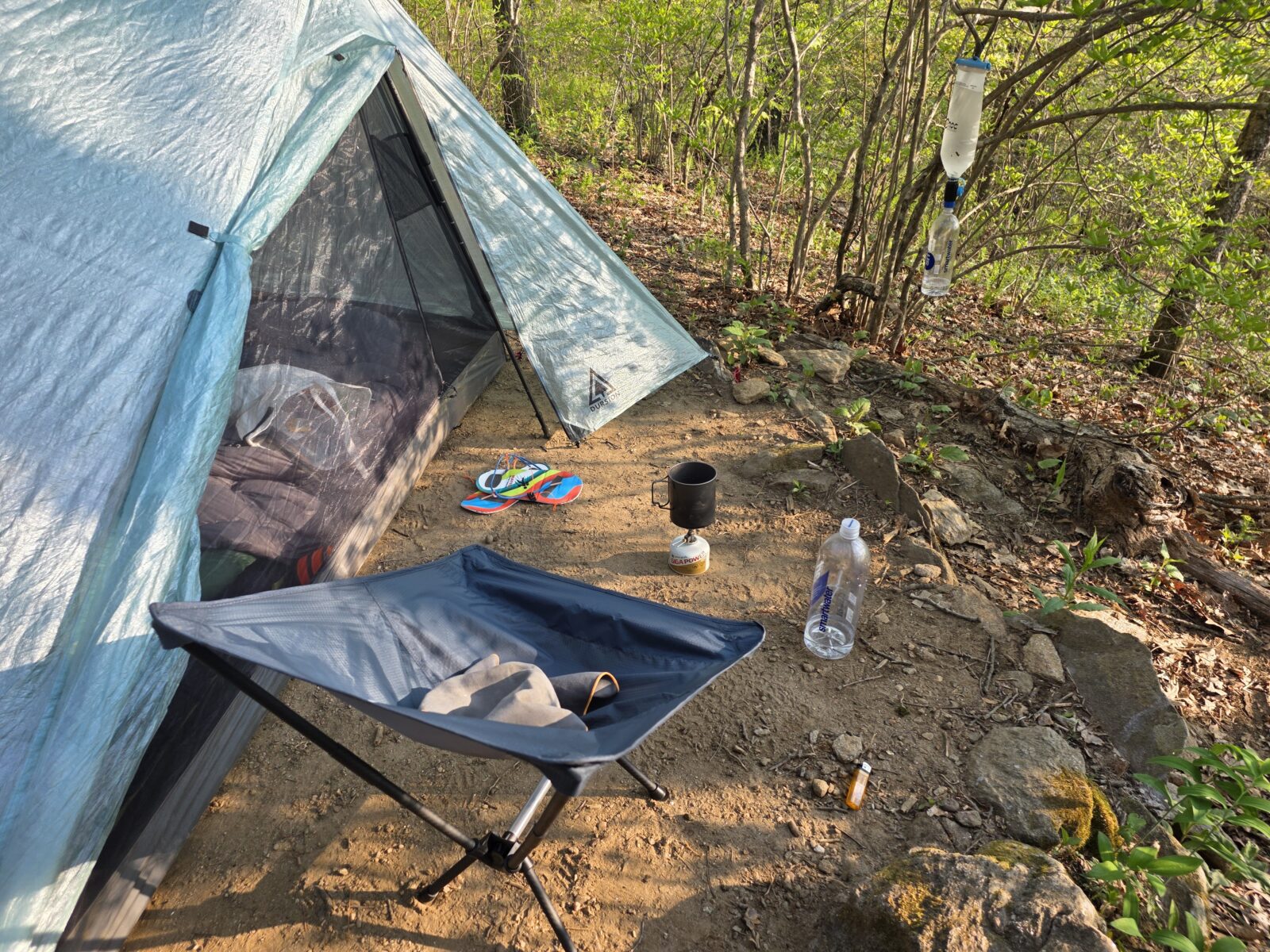
Exhausted, I set up my little camp chair, looked out at the Georgian wilderness, and cooked my dinner.
Even though I had stayed up until 2am the previous night, I was conked out by 9pm. I heard people chatting at the shelter, but I was too tired to join them. I woke up at 4am to the howling of wolves (actually owls, but I didn’t know that at the time), stayed up until 5, and then managed to sleep until 7am.
Well rested but sore, I was ready to go. Now that I understood how water purification worked, I only filled up to about 2L, saving a couple pounds of dead weight. I made my breakfast, which I thought was oatmeal, but was actually a weird oat-free oatmeal that was a sort of disgusting paste. I had ordered it in a rush the day before the hike, thinking that maybe I should bring breakfast with me.
I was surprised to find out that day two was also constant mountains. In fact, the whole AT is basically just hiking up and down mountains all day, but I had no idea. Flat sections were an absolute joy, as were slight declines, but both were in short supply. Mostly it was steep inclines with switchbacks and rock stairs, and then corresponding steep declines. My heart rate would get up to 140 on the inclines and I would have to stop to let it calm down.
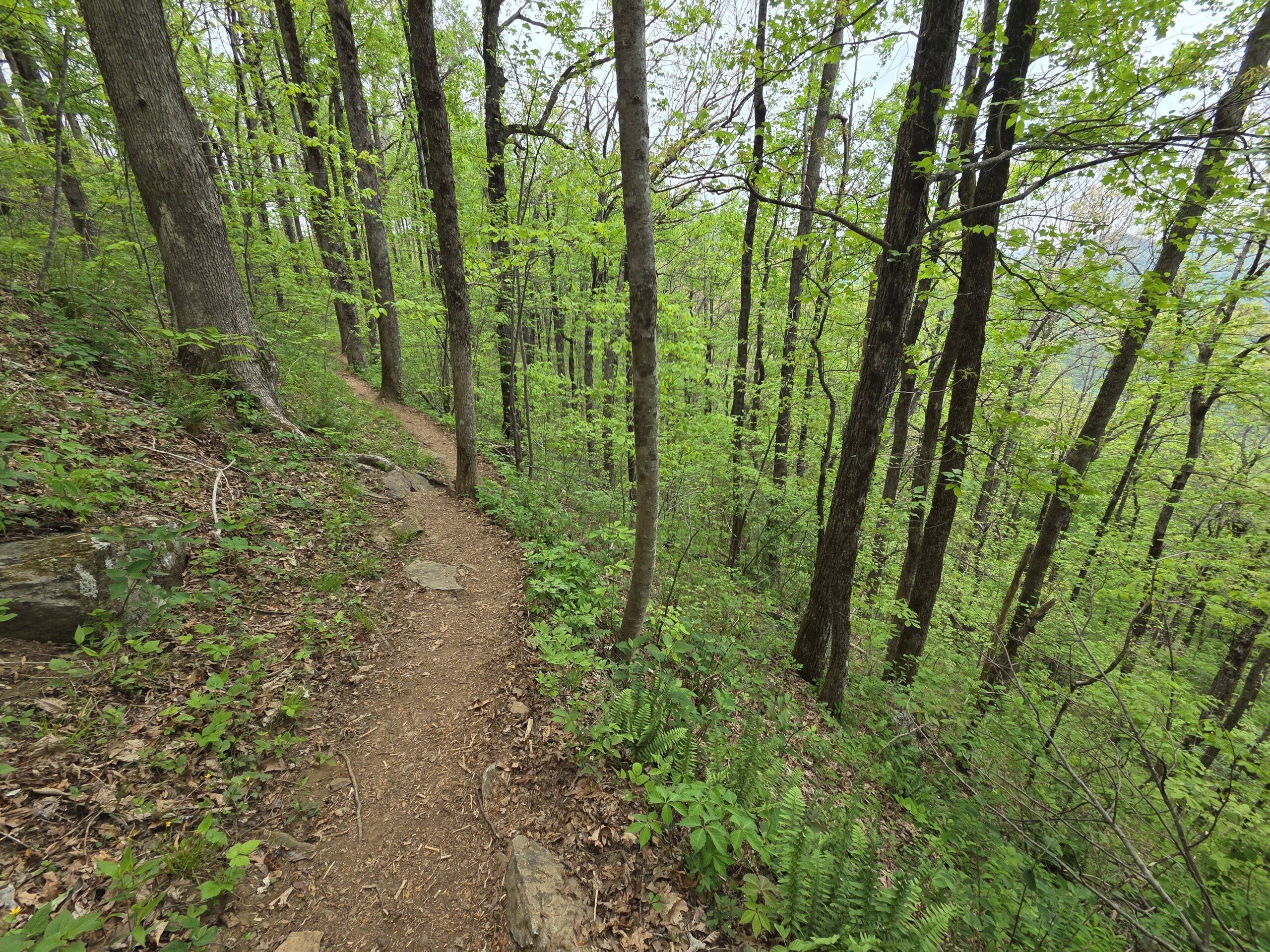
The terrain was varied and moderately interesting, but on day two I realized that unlike any other hike I had done, the AT was really just a random line through the mountains. There were no beautiful vistas or waterfalls, it was just a cross-section of northern Georgia. Trees, butterflies, millipedes, small creeks, rocks, and a narrow dirt path through it all.
By the time I reached the first shelter at 8.4 miles I was pretty exhausted. I decided to take a break and rest before deciding whether to camp there or go to the next one. A thirty-something year old Chinese guy was at the creek fiddling with his water purifier, trying to get some water. Surrounding him were five different bags. A backpack, a duffel bag, a sleeping bag in a stuff sack, a tent in a stuff sack, and a huge fanny pack.
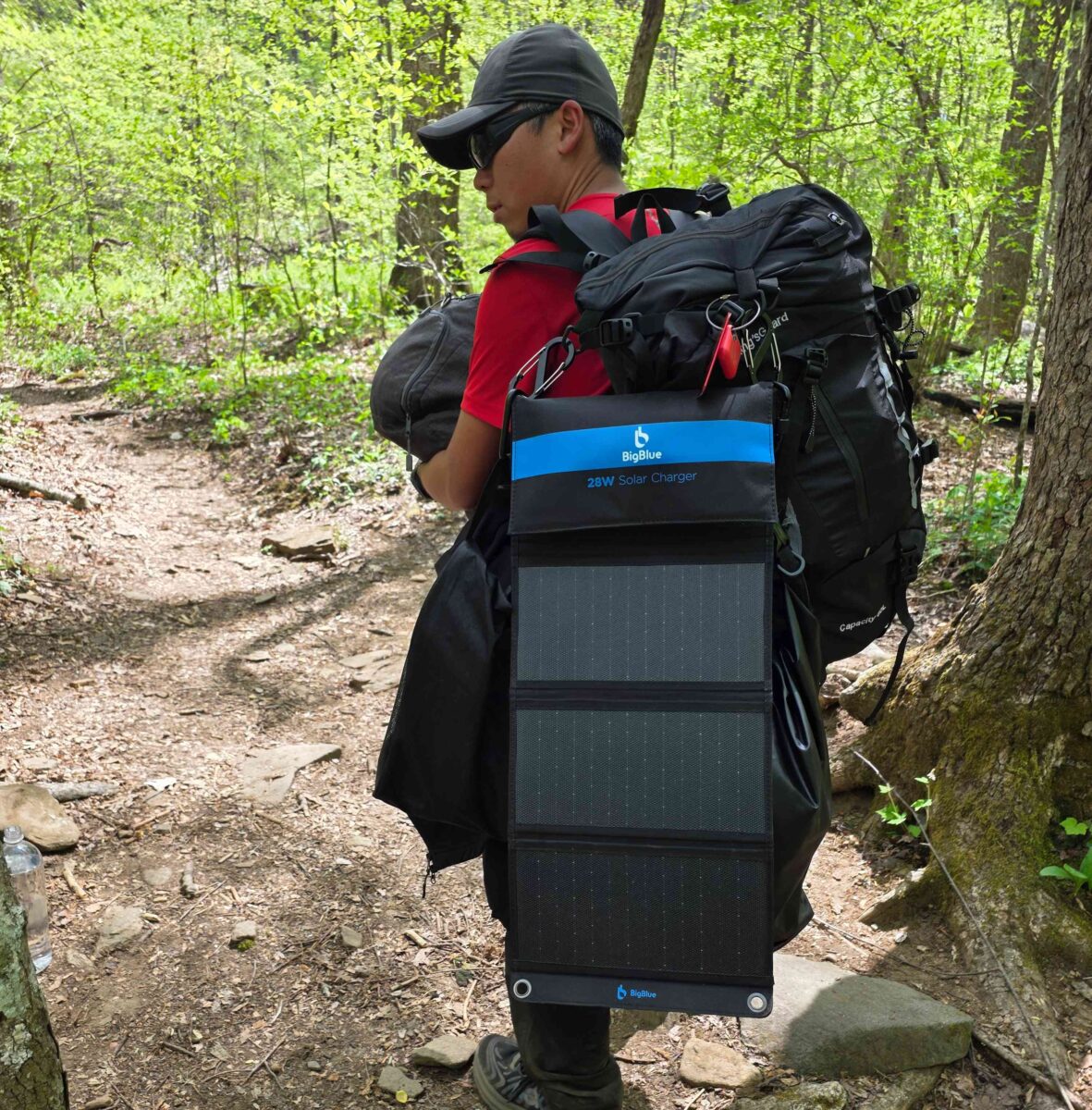
I struck up a conversation. Henry had just been “separated, but not voluntarily” from the military, and decided to hike the AT. He had clearly just bought random camping stuff, maybe at Wal-Mart, and had headed to the trail. His plan was to go all the way to Maine by October. He seemed to be about as shell-shocked by the experience as I was, but seemed a bit surprised that I thought he had way too much stuff. “Yeah, It would be nice to get it down to just two bags I think.”
He had no trekking poles, which absolutely baffled me. I couldn’t imagine doing the hike without them, especially the descents. But he had to carry his duffel bag in one hand, so he couldn’t use them anyway. Nearly every single hiker uses an app called FarOut. It has a detailed map of the AT including markings for water sources, camp sites, shelters, etc., and hikers can leave notes on each one in real time. So, for example, you can check upcoming water sources and see which ones are flowing. Henry was not using the app, but rather just looking at google maps. Unimaginable. I gave him some information on where he could get water next.
I asked where he was going that day, and he said Gooch Mountain Shelter. If he was going another seven miles, what was my excuse not to? I said I’d see him there and started hiking again. Shortly after I passed a woman with a 1-2 year old baby. I asked where she was going and she said, “The Great Smoky Mountains of Tennessee!”. She had an impeccable attitude, but I later heard that her baby was crying all night the night before. Not sure how she did it.
Everyone hikes at different paces. Not just absolute pace, but different pacing and breaks for different situations. I was very fast on flats and descents, but extremely slow on uphills. Other people are more consistent. I met one girl who races up hills because she claims it’s easier that way. For that reason, even though you’re passing people and being passed, sometimes by the same person, you rarely walk with anyone else. Even friends who hike together will often hike separately and just meet up at shelters.
But Tim and I were basically the same pace. I passed him while he was taking a break, then he passed me when I was taking a break. Then I caught up to him on a flat. We argued over who should pass who, but we ended up hiking together for the rest of the day. He worked at the municipal utility company in Jacksonville Florida, was about to retire in a few months, and thought that maybe through-hiking would be his new hobby. This was a three day test to figure it out. He borrowed his brother-in-law’s camping gear and just headed out to the woods. He was very introverted (I never saw him talk to anyone else at camps or shelters), but that worked well for hiking. We mostly hiked in silence, but would occasionally have a short conversation, usually on a flat section. He hoped his wife would get into trekking, too, but she was a “girly-girl”, so he wasn’t sure.
Tim had started at a later shelter than I had, but had walked the wrong direction for two miles, so he had an extra four miles total on his day. That would have been devastating for me. You’d think that following the AT would be easy, and it mostly is, but there are junctions with other trails and weird semi-side trails that don’t lead to anywhere. I had gone maybe a quarter mile in the wrong direction earlier. It’s pretty easy to do, and most hikers I met had done it at some point. Two miles was brutal though.
A few times that day I had encountered a girl named Keri Ann (almost positive I have her name wrong) with two dogs. I didn’t realize people hike with dogs, but it’s actually very common. Sometimes they put little packs on their dogs and the dogs carry their own food. She explained that her dogs both had medical issues, so she had to carry their food.
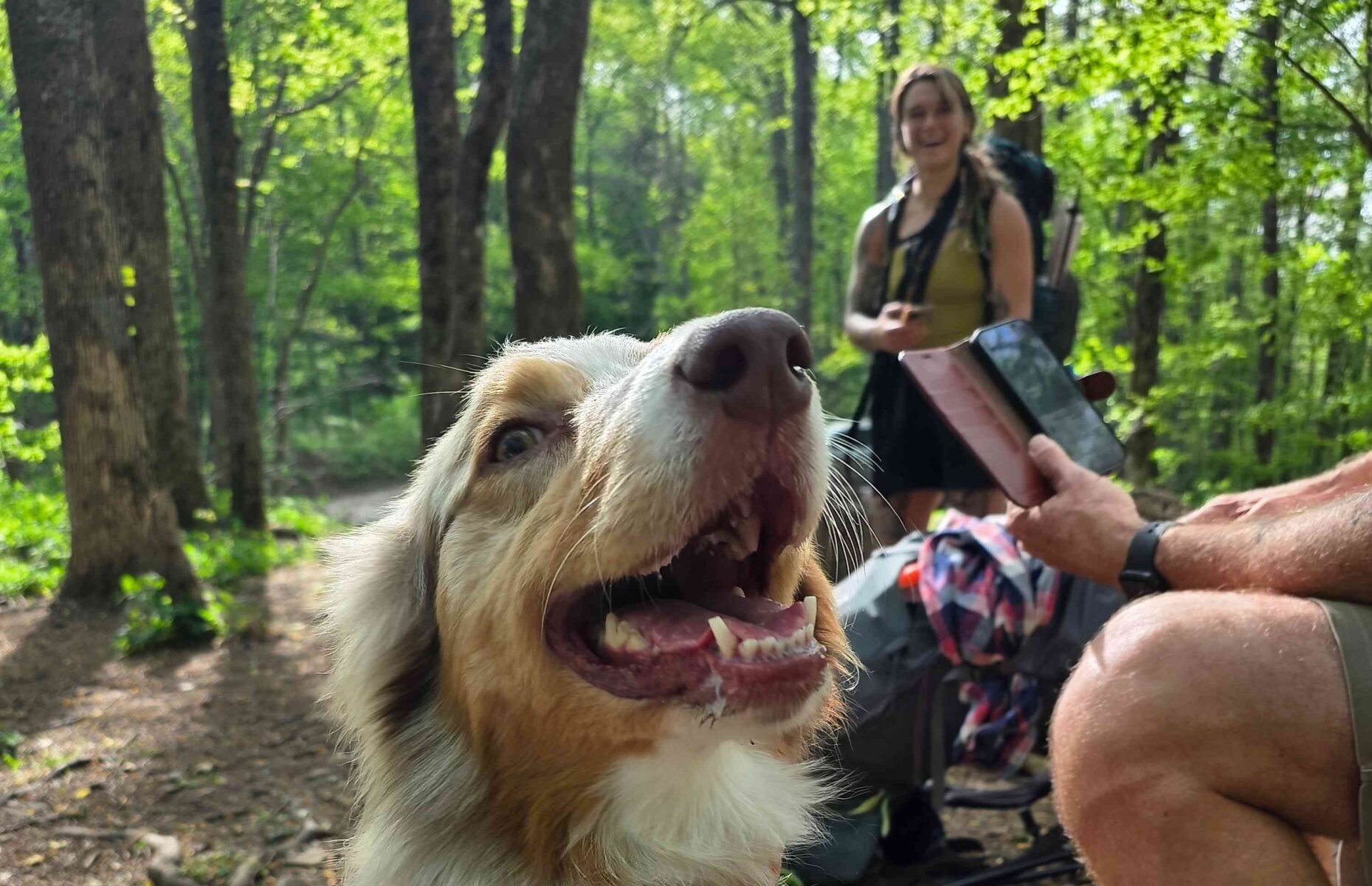
Keri Ann was clearly a pro, though. There are two distinct groups of hikers on the AT: people like me, Henry, and Tim, who have no idea what they’re doing but are figuring it out and could eventually become pros, and then there are people like Keri Ann who actually hike all the time. They claim to love hiking, which was surprising to me. I found almost no joy in the actual hiking, but she just loved charging up ascents and back down. That was baffling to me.
As we got near the end of our day, Tim and I were absolutely exhausted. Even though he had hiked more, I think I was even more shot. I needed frequent breaks and told him he could go ahead, but he kept waiting for me. Normally you would never take a break half a mile before your final destination, but there was a big creek right before the last half mile of steep ascent, and we both needed a break. We soaked our sore feet in the freezing cold water, which actually helped a lot, and ate snacks. It was amazing how much immediate energy I would feel from just eating one bar. All day I was thinking about snickers bars and sour patch kids, even though I never eat candy. I had brought healthy snacks like nuts and Larabars, and somehow I just knew that raw sugar would be better.
We finally made it to the shelter, which was abuzz with activity. I sat down at the picnic table with the thousand-yard stare usually reserved for soldiers in battle. I could barely muster the strength to take off my backpack, dig out my food, and get dinner going. My feet ached, and my heels had developed an acute pain around mile 10, where it felt like the backs of them were bruised, and every step felt like fingers pushing into the bruises.
I chose “American Buffalo Goulash” and I honestly can’t explain to you just how amazing that meal was. My mouth waters just thinking about it now. I have no idea if this freeze-dried camp meal is actually the pinnacle of culinary achievement, or if I was just starving. My ring told me that I had burned 1800 calories just in steps (I don’t think it knows about ascent and descent), and I had eaten fewer than 1000 calories for the day. You’d think that you would eat a lot while hiking, but somehow you’re just not that hungry most of the time. Stopping to cook an extra meal seems like a huge waste of time, so I just didn’t do it. And yet, the people I met who did the most miles stopped and had lunch every day.
As I wolfed down my American Buffalo Goulash (740 calories), a girl I recognized from the first night’s shelter sat down across from me. She had actually started in the same place as me, but didn’t seem to be fatigued at all. Her name was Audry, and she was an absolute pro. I was a bit delirious and didn’t take in her entire story, but she did some sort of work on trails, loved hiking, and did through-hikes all the time. She asked me if I wanted a Snickers, and I’m not sure any offer had ever been so exciting to me in my life. I had been thinking about Snickers all day.
The king of camp that night was a guy named Carl. He was a local and had just hiked up from a closer access trail, so he wasn’t exhausted like the rest of us. He listened to a baseball game over a radio, cooked an extremely elaborate sausage sandwich with condiments over the fire, and encouraged everyone to sit in his comfortable camp chair. He smelled like booze and weed, but I never saw him partake in either. Despite a fire ban, he had a huge fire going, fueled with wood that he had cut with a huge lightweight camp saw. Tim was too tired or introverted, so he set up his camping hammock and didn’t hang out at the fire. I heard that Henry had trudged into camp and set up his tent, also too tired to join.
Carl, a guy named Kevin who I hadn’t met before, Keri Ann, Audry, and I sat around the fire. We commiserated over the tough day, shared our stories, and talked about camping gear. Audry asked if anyone had any unusual hiking luxury items, and showed us her haircut scissors. My hair had become soaked with sweat during the hike and was constantly in my eyes, so I almost took her up on her offer to give me a haircut, but worried that a hasty haircut done by firelight may not translate well to the real world once I was off trail. Keri Ann brought out a huge bag of sour patch kids, which she shared with us. I knew how much every gram of weight mattered and I felt bad eating food someone else had carried so far, but they were almost as delicious as the snickers.
Keri Ann also shared “bread insides”. The explanation for why she had “bread insides” didn’t make much sense to me, but she had scooped out the insides of a sourdough loaf and put it in a bag. She said she loved sharing food, and there is really probably no better phrase to hear when you’re exhausted on the AT. I felt bad that I didn’t have anything to share with people.
We all started planning where we’d hike to the next day. Because of the Blood Mountain bear can restrictions there were really only two viable options. The sane choice was another 8.5 mile day to a campsite right before the Blood Mountain restricted area. Blood Mountain is the tallest mountain on the Georgia section of the AT, so it’s no joke. But, if one wanted to go further they could go 17 miles to get past Blood Mountain. Keri Ann and Audry decided it would be really fun to hike the full 17 miles. I thought about joining them, but every part of my body was sore. I knew there was no way I could do it.
I was hoping I would be in less pain the next morning, but my heels were even worse than before. I struggled to stand up and walk to collect water for the day. But somehow, as I warmed up a bit and got my trekking poles in my hands, walking became a little bit easier. Every step hurt, so my pace slowed to almost half. Luckily the first mile and a half was relatively flat. I felt confident that I could make it the 8.5 miles to the last tent site before the restricted area.
The best moments of hiking were the flat areas where you managed to think about anything other than the hike. I’m not sure how other people are, but I found it really difficult to not think about the hike as I hiked. Would it get easier? How far had I gone so far? What was coming up next? Should I quit? Will I have less pain tomorrow? But on the third day, despite the pain, I found myself in the zone, putting one foot in front of the other, pondering life as I walked on the narrow path cutting through the side of a steep mountain.
In an instant I was yanked back to reality. I heard a loud rattling noise and in the corner of my eye saw a snake coiling. I screamed and jumped backwards. I had just stepped two feet away from a rattlesnake that was now facing me and rattling loudly. I was absolutely terrified. I backed up and stood there, waiting for it to do something, but it just sat there looking at me. The hill above and below was steep and full of plants, leaves, and branches, so it wouldn’t be easy to go around the snake. I set up my camp chair and decided to wait it out.
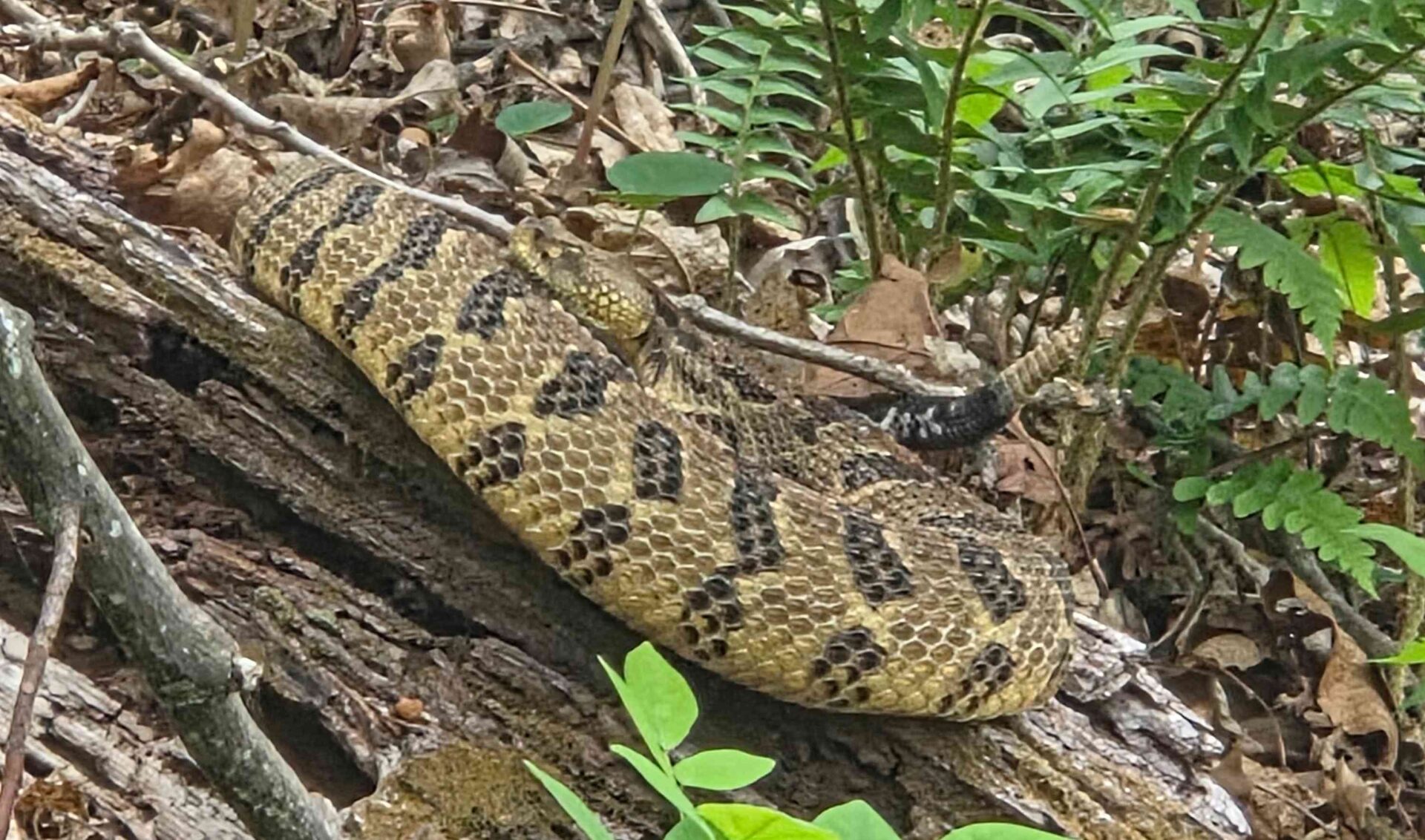
Thirty minutes later the snake hadn’t moved, and Kevin caught up. “Rattlesnake!” He stopped and also had no idea what to do. Ten minutes later an older hiker started coming from the other direction. “Rattlesnake!” He stopped, but he had another twelve miles to go that day so he just walked right past it, putting his poles in between him and the snake. I thought about videoing it, but thought it might be a bit rude to film a man’s death, so decided not to. The snake freaked out and rattled the whole time, but he got past. Kevin and I couldn’t believe it, but weren’t brave enough to try it ourselves.
After another fifteen minutes of the snake not moving we bushwhacked our way above it, really nervous that we’d slip and fall on top of it.
For the next half mile I was certain that every root and stick was a snake. But then I started thinking about how at least it warned us with the rattle and didn’t bite me, so maybe I didn’t need to be so careful. I kept going and stopped looking down.
My morale was really low that day. I was in extreme pain, scared of rattlesnakes, exhausted, and just not enjoying the trail. I didn’t have to be here. I didn’t even like hiking. What was I doing? The forecast said there would be thunderstorms soon, and then the next day, when I would have to go over Blood Mountain, it was supposed to be extra hot. I had all sorts of warm weather gear in my backpack, but it was so hot that I never used any of it, except at night in camp.
Five miles in, I came to Woody Gap. I saw it on the map, but didn’t realize that it was a crossroads into civilization. There was a huge parking lot full of cars and trucks, a road going through it, an outhouse, and a bench. It began to rain. I sat down and went on my phone, looking up nearby hotels, hostels, shuttles, and ubers. I was done. I texted the nearby hostel to see if they had availability and messaged the local shuttle service to see if they had any drivers that could pick me up.
While I waited for them to reply, I saw that Henry, the guy with the five bags, was across the parking lot eating lunch. I figured I should at least say goodbye to him, so I limped over. He was having lunch, which was a weird concoction of milk powder, nutritional powder, and olive oil. He explained the theory to me on why he ate that, but it didn’t look very appetizing. I still had a bunch of camping meals, so I figured I should at least eat one with him while I waited for my exit to materialize.
Another hiker, Austin, showed up. I had run into him once or twice before but he was quiet and didn’t talk much. He had a reputation for borrowing people’s battery packs and using a lot of power. Kevin offered to let him charge in his car, which he had parked there for his planned exit, and Austin eagerly took him up on it. I charged for about ten minutes too.
As I ate I got a bit more energy and felt better. I thought about how soon I would be in a hotel reflecting on my AT experience, and I realized that I would regret it if I quit today. The whole point of the AT, as far as I could tell, was to endure hardship, and I was about to quit before the first rainy hike and the tallest mountain. Surely I would feel better about myself if I just pushed one more day.
Before I could think too hard about it, I just started walking into the woods again.
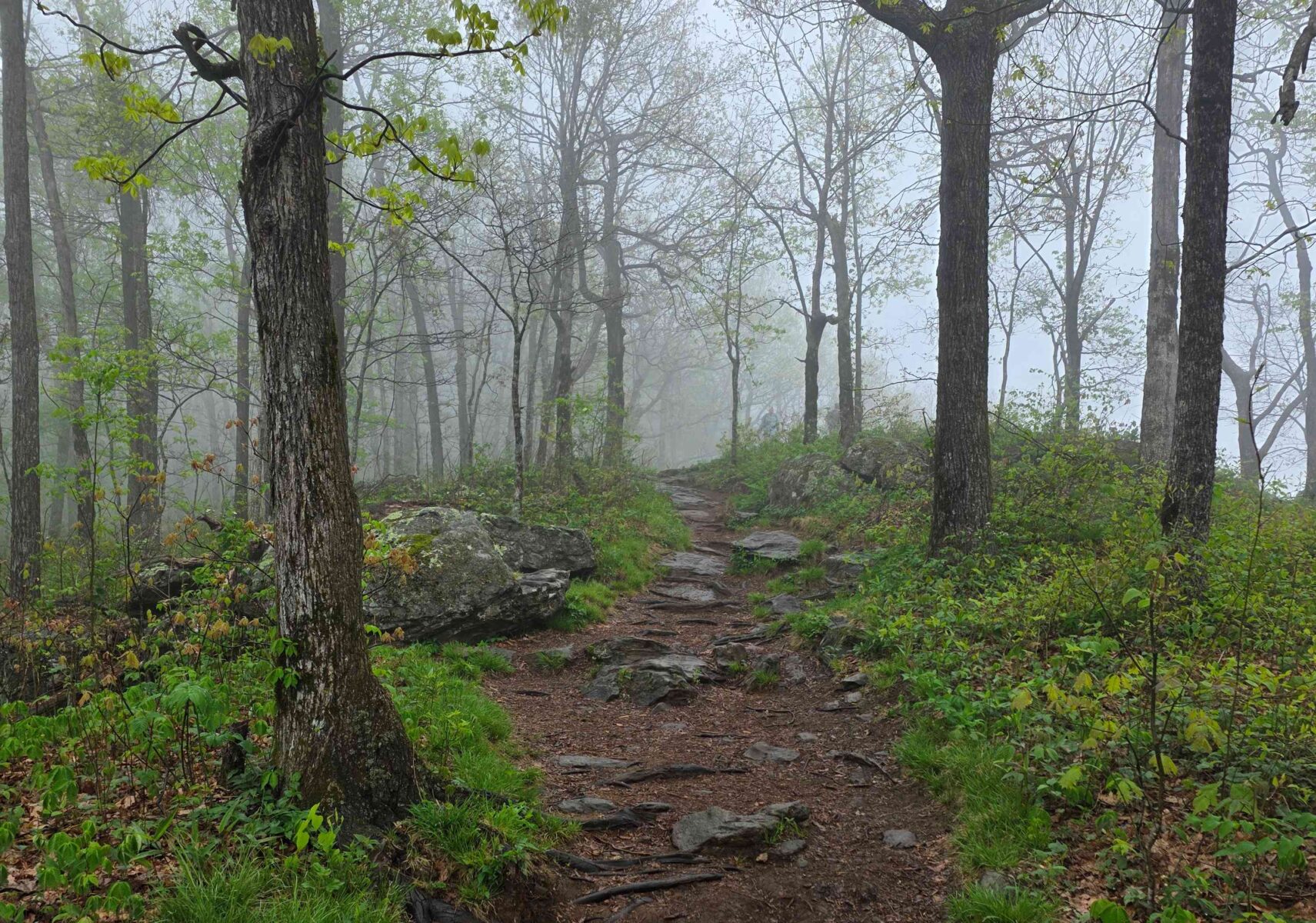
It began to rain, and I got soaked. Every step was painful, but at least I had more energy. It was amazing how dependent my attitude was on food. I had a moment, as I shuffled down an easy descent, where I thought about how some day my body wouldn’t be capable of this. Some day I might not have the time. Some people dream their whole lives of hiking the AT and never do it, but here I was. I had the time and I had the gear, and my body was holding together just well enough to hike. And as I walked through the rain and fog, I had a fleeting moment of actually enjoying the hike.
The camp site was more basic than the shelters I had been to before, but still nice. There were four elevated tent sites, one of which was occupied by two matching blue tents. I said hi as I walked past and I think I woke the people inside up. They never talked to any of us, which was really strange. I set up my tent and began shuffling down to the spring to get some water. My heels kept getting worse and worse and I could barely make it down there and backup. On a normal day you’d run down and up in thirty seconds, but it took me about ten minutes.
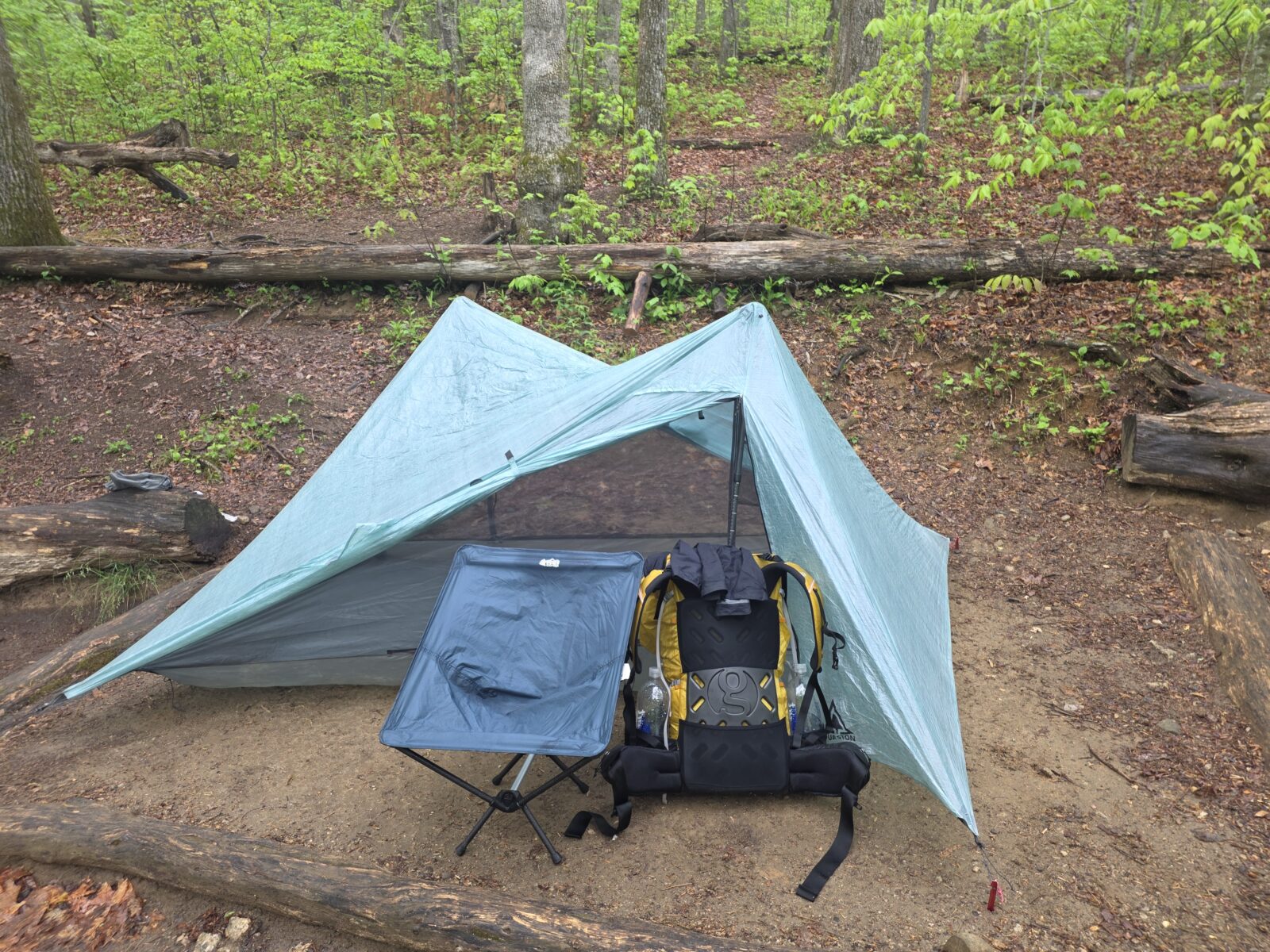
As I made my dinner Henry and Austin made it to camp. Austin had a huge heavy backpack so he was slow like Henry. Henry set up his tent and Austin sat on a log and took out his phone. He was still on it an hour later and hadn’t set up camp at all. We were so tired we barely exchanged a word.
I slept for ten hours and my heels were even worse the next morning. Surely the smart thing to do would be to go backwards 3.5 miles and get out of here. What’s the point of torturing myself and going over Blood Mountain? I couldn’t do it, though. It didn’t feel right to go through all that pain just to go backwards. Before I could talk myself out of it, I headed towards Blood Mountain.
I now had several pounds less food than when I started, and I had gotten smart about water. Now that I knew how much water I actually drank while hiking, I could fill up my bottles partially and refill at water sources along the way. I’d drink as much as I could in camp and at water sources, and just carry the minimum through the hikes. It makes a big difference. On day one I carried 6.6lb of water, but as I left for Blood Mountain I only had about 2.5 pounds. Those pounds matter.
I only had 7.4 miles to go that day, but it was all uphill and then all downhill. No flat sections, no gentle slopes. I expected the uphill to be brutal, but I noticed something remarkable. My cardio had improved! I still got hot and sweaty, but my heart rate no longer elevated. I barely had to take any breaks at all on the way up. My legs still got sore and my heels were killing me, but at least cardio was better. The view at the top of Blood Mountain was among the better ones on the trail so far. Downhill was rocky and hard and painful, but it didn’t really matter. I knew I was getting close to being done, and I was ready.
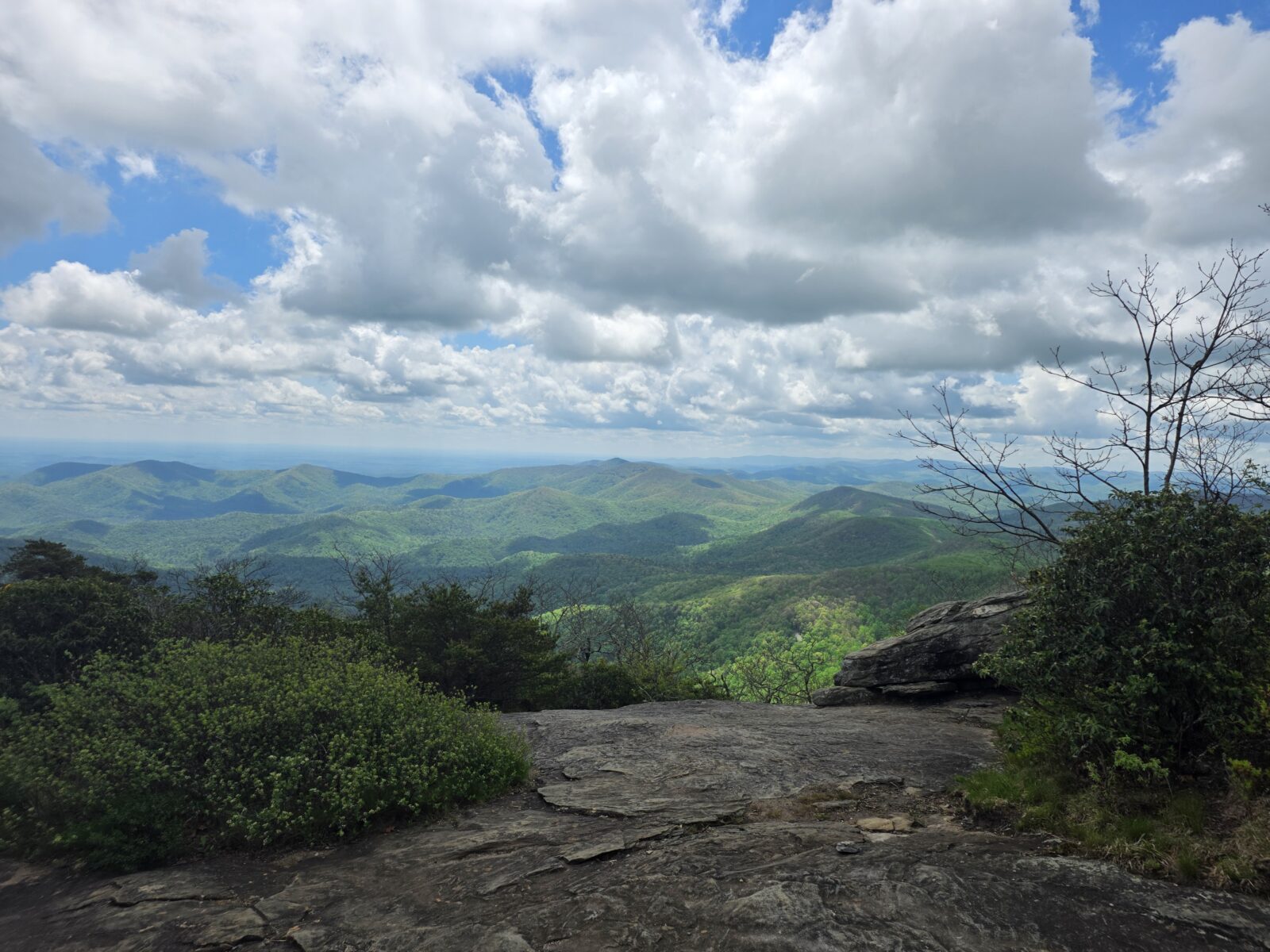
The end for that day was Neel’s Gap. The trail actually goes through a hostel and gear shop, so it’s the first bit of comfort most hikers encounter. Austin had just gotten there and ordered an oven pizza. I bought an ice cream snickers, an orange, a banana, and potato chips.
We talked about Henry. He was really slow because of all his gear but he absolutely had to make it to the hostel before they closed at 6pm. He didn’t even have basic bear supplies like a rope to hang food, so there was no way he could camp on Blood Mountain. I tried to get the hostel to let me prepay his fee and let him in late, but they wouldn’t do it.
Austin took out all of his gear and the gear shop did a “shake down” where they tell him what he should change. It was then that I learned that despite his huge backpack, he had no sleeping pad! He was sleeping directly on the ground, which generally had roots and rocks on it. You also lose a lot of heat to the ground without an insulated pad. He said he’d consider getting one.
At five thirty my ride came. I said goodbye to Austin and told him to say goodbye to Henry if he saw him again. You never really know who you’ll see again, because if someone has a different pace than you, you end up staggered by a day or at least at different shelters.
I was hoping that I’d make it far enough to fly out of a different airport, but I ended up closest to ATL, the airport I flew into. Now I’m in Chicago. My legs are still sore, but my heels don’t hurt as much. The thought to get some new shoes, fly back and hike some more has crossed my mind. I’m not sure if it’s because I want to, or because I feel like I should. I think I’ll probably come back next year and hike some more.
I didn’t miss not having my laptop, although as I walked and imagined this blog post I found myself narrating it to the passing trees. I’m so grateful for all of the characters I met on the trail and hope they all make it to the end. They were people I would have never gotten to know in real life, and I’m grateful to have shared some moments with them.
I have a lot of advice for people who want to hike the trail, and will probably make that another post. I’ll also probably do an AT Gear Post, because even though my performance was among the worst of the people I met, my gear was absolutely the best.
###
If you’re one of the people I met on the trail, please leave a comment with your email!


Leave a Reply